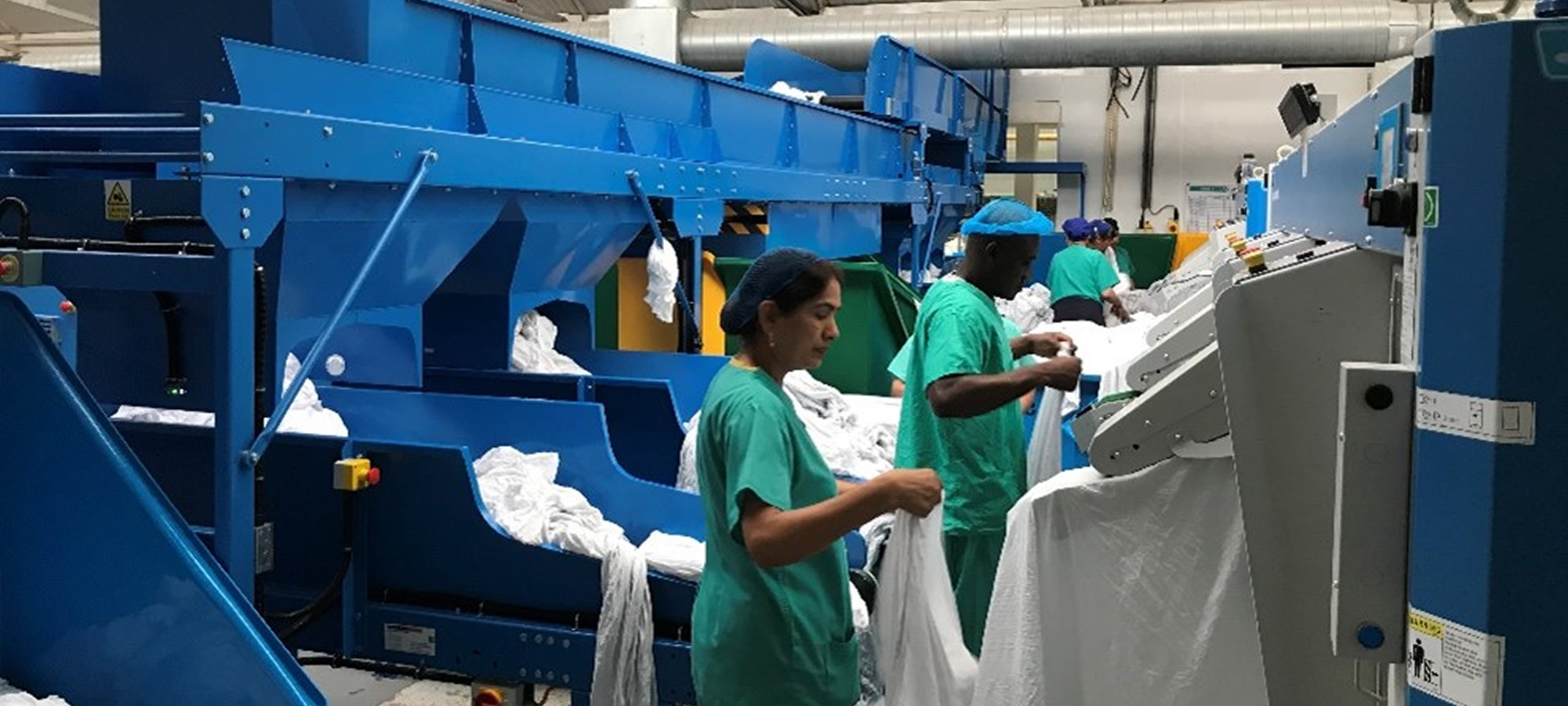
Nastri trasportatori per lavanderia
Le lavanderie industriali trattano in genere oltre 500.000 capi di biancheria sfusa a settimana e, per farlo in modo efficiente, l'automazione è essenziale. I nastri trasportatori costituiscono la spina dorsale dei sistemi di trasporto automatizzati all'interno delle lavanderie, spostando i singoli capi di biancheria dalle aree di ricezione della biancheria sporca, attraverso i processi di lavaggio, fino all'imballaggio e alla spedizione finale al cliente.
Le applicazioni tipiche dei nastri trasportatori nelle lavanderie includono:
- Smistamento della biancheria sporca
- Trasportatori a gradini indicizzati per caricare lavatrici CBW con carichi da 50 a 100 kg
- nastri trasportatori per torte
- Nastri e piattaforme per la selezione della biancheria
- Carrelli navetta per il carico dell'asciugatrice e nastri trasportatori per l'asporto
- Nastri di alimentazione e scarico per confezionatrici termoretraibili
Molte lavanderie operano in stabilimenti consolidati con attrezzature preesistenti, e una delle sfide per l'automazione è trovare spazio sufficiente per installare i nastri trasportatori. Tutti i nastri trasportatori Amber sono progettati e costruiti per la singola applicazione e possono quindi essere personalizzati in base alle esigenze dello stabilimento, modificando lunghezza, larghezza e altezza del nastro.
- Letti in acciaio dolce verniciato a polvere con mantovane in acciaio inox o verniciate a polvere.
- superfici interne lisce
- superfici interne senza fessure
- Bordi orlati intorno alle mantovane
- Cinghie continue
- Robusti dispositivi di protezione contro lo schiacciamento delle dita situati sulla parte superiore del rullo
- I trasportatori orizzontali sono preferibili immediatamente prima delle posizioni di trasferimento a caduta.
- Aumento della velocità del nastro trasportatore durante il trasferimento da un nastro all'altro.
- Nessun carico sopra i lati delle mantovane
- L'altezza di dislivello tra i nastri trasportatori non deve essere inferiore all'altezza della fascia di supporto del nastro trasportatore di alimentazione.
Frequently Asked Questions About Laundry Conveyors
Laundry conveyors automate the movement of linen through commercial laundry operations. They can transport linen from dirty linen receiving and sorting areas, through washing, drying, ironing and folding processes, and finally to packing and dispatch.
Typical applications include dirty linen sorting, indexing step conveyors for loading Continuous Batch Washers (CBW), cake conveyors, linen sorting belts and platforms, dryer loading shuttle cars and takeaway conveyors, and shrink wrapper infeed and outfeed belts.
Yes. Many commercial laundries operate on established sites where space is restricted by existing equipment. Amber designs and builds its laundry conveyors for the individual application, allowing dimensions such as belt length, width and height to be tailored to the site.
Belt conveyors can move dirty linen from delivery vehicles to sorting or washing areas. After washing, pressed linen or “cakes” can be conveyed to sorting areas or directly to dryers, while further conveyors can transfer dried linen towards ironing and folding operations.
Amber identifies snagging as a major consideration when conveying loose linen. Internal conveyor surfaces should therefore be smooth, continuous and wherever possible gap-free, with particular attention paid to avoiding narrowing gaps where linen could become trapped or wedged.
Where one conveyor transfers linen onto another, Amber recommends that the takeaway conveyor operates faster than the feed conveyor. This speed differential helps reduce the possibility of linen becoming trapped at the transfer point and is particularly important when transferring from a declined conveyor to a horizontal conveyor.
Small-diameter rollers, such as the 60 mm diameter rollers referenced by Amber, can be used at the head and tail of conveyors to reduce the V-shaped gap between adjoining rollers. This reduces the distance linen must travel when transferring between conveyors and helps reduce trapping.
Tuck-under occurs when linen sticks to the conveyor belt and begins following the return belt underneath the conveyor. Amber advises reducing belt friction where possible so that linen releases more easily. Where this is not possible, a sensor beneath the head roller can be linked to the conveyor emergency-stop system to detect the problem and stop the conveyor.
Depending on the conveyor arrangement and height, protection can include nip guards, full-panel underguards and local roller covers. Amber notes that guarding should provide appropriate protection while taking account of linen snagging, cleaning access, maintenance and the likelihood of operators coming into contact with moving parts.
Yes. Amber provides conveyor systems for moving linen through multiple stages of commercial laundry operations, and complementary materials-handling equipment such as lifts, hoists and shuttle cars can also be incorporated to improve the efficiency of linen movement around the laundry.